
The short answer
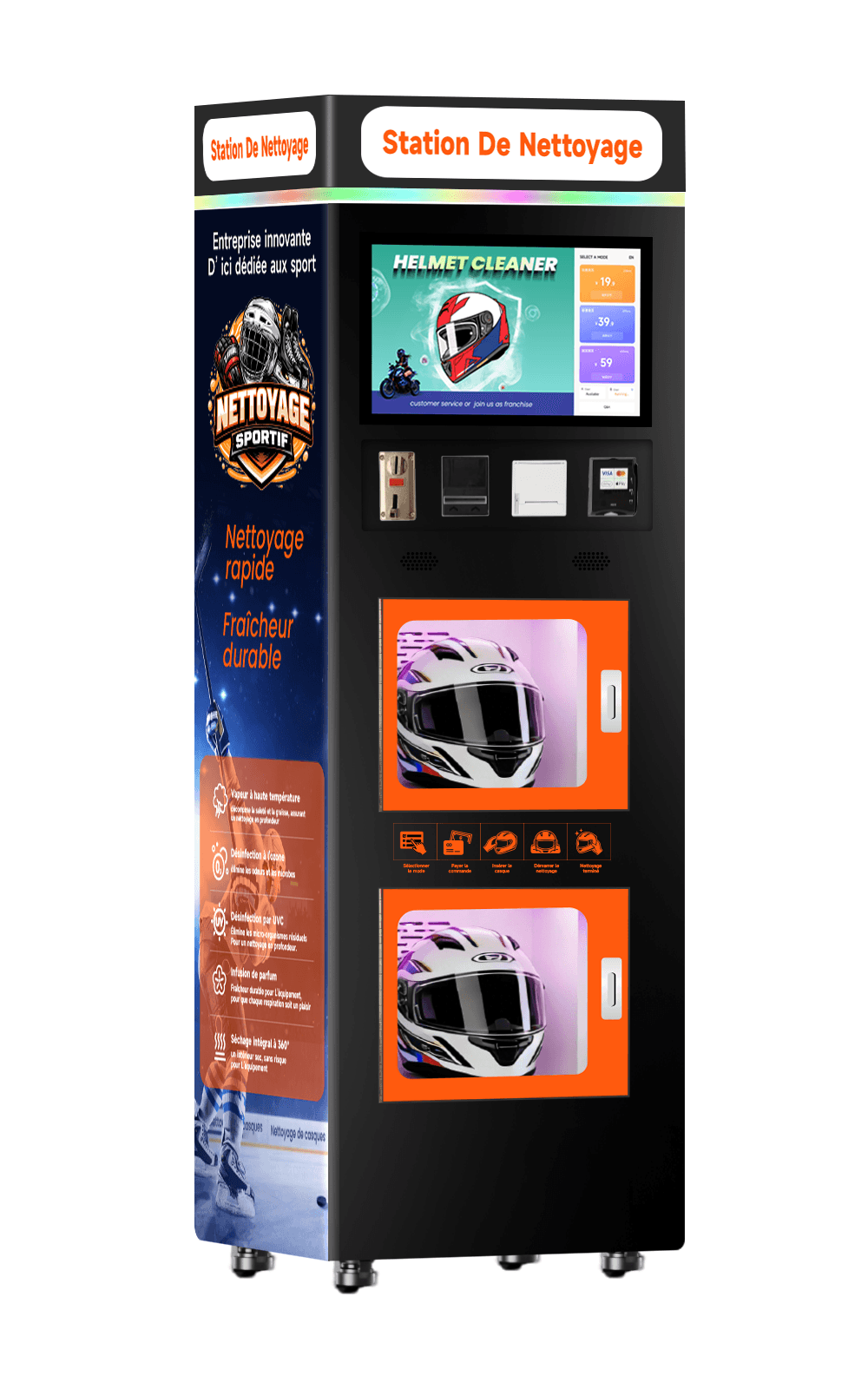
An automatic helmet cleaning machine guides a user through helmet placement, cycle selection, payment where configured, cleaning, hygiene treatment, odor care and warm-air drying. The exact sequence depends on the confirmed model and project configuration; it should not be described as a medical sterilization process.
1. Helmet placement and user guidance
The user checks that the helmet is compatible, removes loose items and places it inside the chamber. Clear screen instructions reduce misuse in unattended locations. Helmets with electronics, intercoms or sensitive accessories require a separate suitability check.
- Inspect the helmet before use
- Follow the interface and chamber markings
- Do not force oversized or unsuitable helmets
2. Cleaning and distribution
OL3-2A uses an atomized-steam cleaning structure, while OL4-2A uses an upgraded direct-spray structure. These are different engineering approaches and must not be presented as identical. Liquid choice, spray pattern and cycle settings follow the confirmed machine configuration.
Next step
Ready to evaluate the helmet cleaning machine opportunity in your market?
3. UV-C, ozone and hygiene treatment
UV-C and ozone-related functions may form part of the configured hygiene process. Performance depends on exposure, maintenance and operating conditions. Operators should use accurate hygiene language and avoid unverified medical or laboratory claims.
4. Odor care, fragrance and drying
The cycle can include deodorizing, fragrance care and warm-air drying. Drying helps reduce residual moisture, but results vary with helmet construction, starting humidity and cycle selection. OL3-2A supports one fragrance position; OL4-2A supports six fragrance options in the confirmed comparison data.
Commercial operating workflow
A customer-facing cycle is only one part of the business. Operators also need pricing, payment settlement, daily inspection, consumable planning, chamber cleaning and a support process. Review the products and compare models before selecting a configuration.
- Choose the location and local payment method
- Confirm voltage and interface language
- Assign daily and scheduled maintenance
- Track usage without promising fixed returns
Important operating limits
Not every helmet, chemical or accessory is suitable. Follow the supplied operating guide, confirm local safety requirements and stop the machine if abnormal sound, smell, leakage or temperature is observed. Contact support with clear error information rather than attempting unapproved repairs.
Related Products and Resources
Frequently Asked Questions
Is automatic helmet cleaning suitable for every project?+
No. Location, helmet type, local rules, payment preferences and confirmed machine configuration should be reviewed before deployment.
Does Olongte guarantee business income?+
No. Revenue and payback depend on local pricing, usage, rent, fees, consumables and operating execution.
Next step